WeKintsugi — Dual-Blind Parallel Writing for Reconciling Shared Memories
WeKintsugi is a web application built on a single premise: most regrets in human relationships exist not because of what happened, but because each person only ever knew their own version of it.
A parent remembers the night their child left home as the proudest moment of their life. The child remembers it as the night they felt most abandoned. A friend recalls a period of silence as "giving space." The other experienced it as being forgotten. After an organizational failure, one team remembers choosing caution; the other team experienced abandonment at the critical moment.
These are not communication failures. They are structural conditions of human experience — we cannot occupy two perspectives on the same moment simultaneously. No messaging speed, no therapy session, no shared journal can fix what was never visible in the first place.
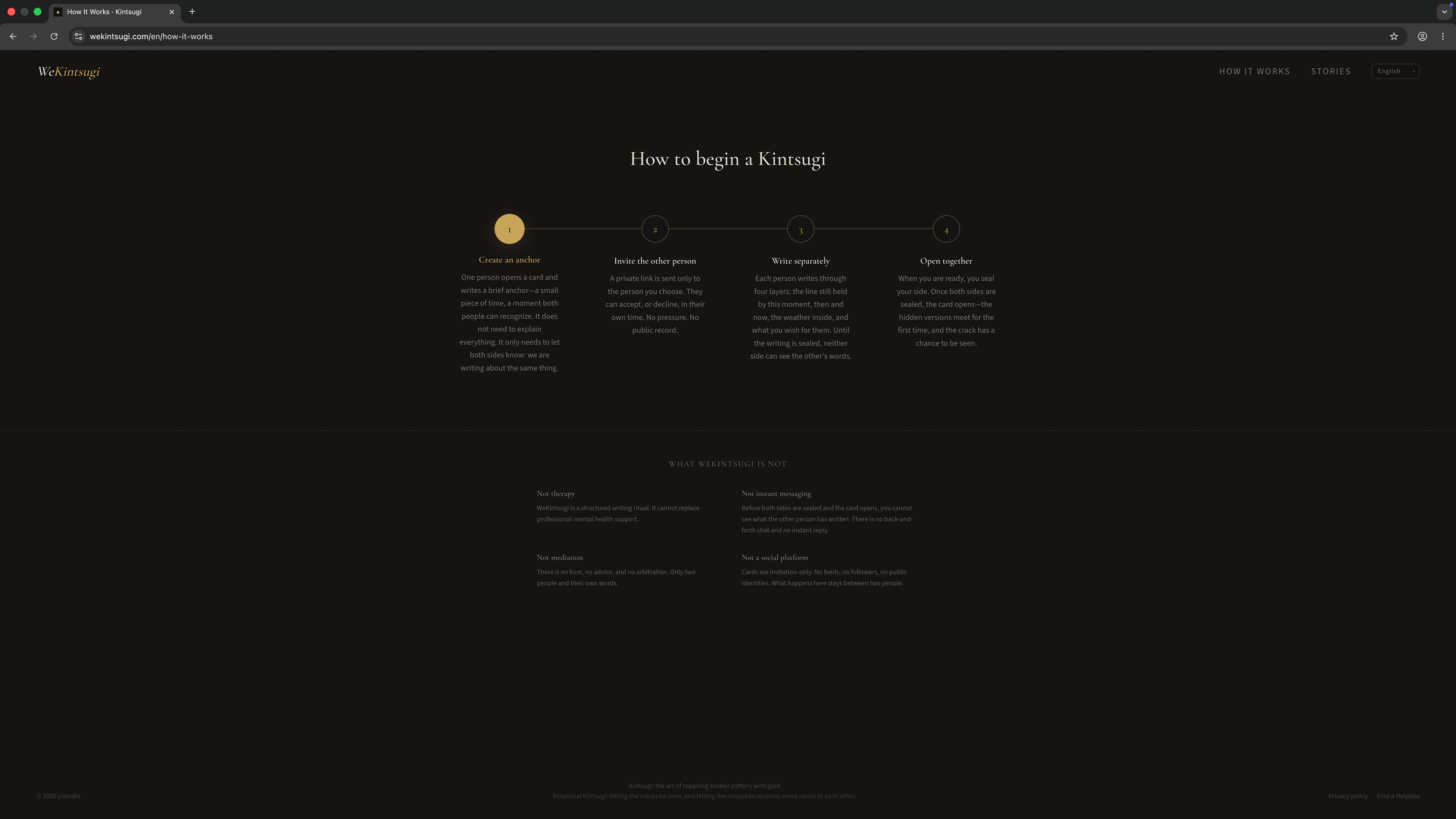
WeKintsugi creates the structural conditions for mutual seeing. The mechanism is a double-blind parallel writing protocol:
Person A invites Person B to remember the same moment — not to discuss it, but to write about it independently. Both write across four psychological layers grounded in interdisciplinary research: what they witnessed (NVC observation), what they felt (Emotion-Focused Therapy), what the other person couldn't have known (perspective-taking research), and what they want to say now (Enright's forgiveness work phases). At no point during writing can either party see the other's words.
Each person's sealed writing is encrypted with a unique AES-256-GCM key before server storage. The platform is architecturally designed so that content cannot be accessed in readable form before the mutual reveal.
Only when both have finished do they turn the card over together. Both perspectives appear simultaneously — in a choreographed 2.4-second flip animation that creates genuine emotional weight. There are no comments, no emoji, no replies.
The product then offers gestures that externalize internal psychological processes into concrete, performable actions: "I see you" — a quiet acknowledgment, never notified to the other party. "Let go" — actively choosing to release the memory. These are not interface buttons. They are designed as ritual gestures that give tangible form to emotional states that would otherwise remain abstract and unresolved.
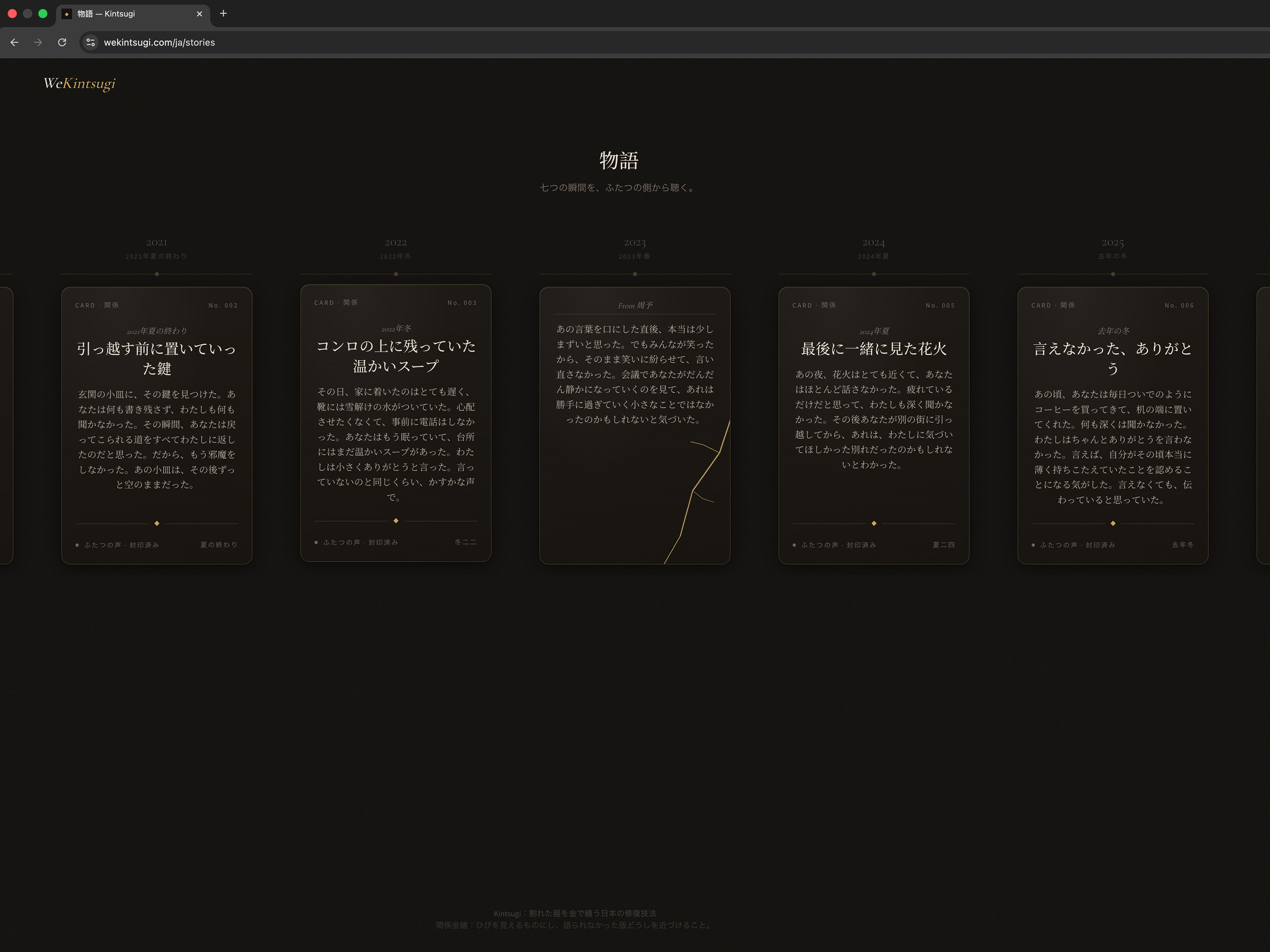
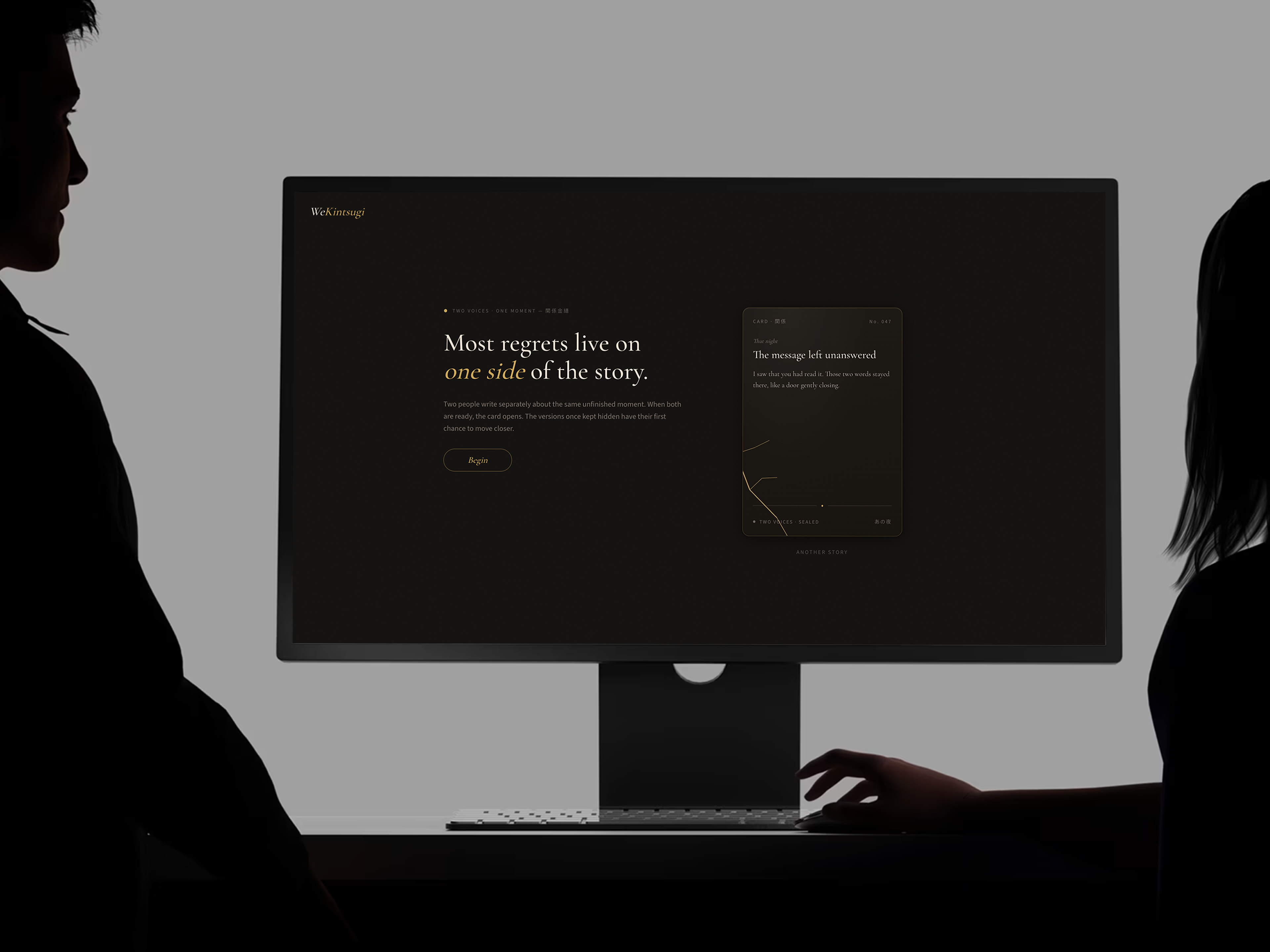
When both people independently choose to preserve the same card, a unique golden crack line silently appears along the seam between their writings. No notification, no badge. It is discovered, not announced. This crack is generated deterministically from a cryptographic seed (HMAC-SHA256 of the card's unique identity) — each pattern is singular, irreproducible, and permanent. It is simultaneously a digital realization of kintsugi's gold-filled repairs, a visualization of cryptographic processes, and a form of generative art.
The name draws from kintsugi (金繕い), the Japanese art of repairing broken pottery with gold lacquer — a philosophy with over five centuries of history that teaches: breakage and repair are part of an object's history, not something to conceal. WeKintsugi translates this philosophy into a complete digital interaction paradigm. The "break" is the asymmetric memory. The "gold repair" is the mutual reveal. The gold line is literally drawn by the system when both parties choose to honor the experience.